Contents
Contents
Talent pools vs pipelines has become an important conversation for HR teams today, especially as they deal with unpredictable hiring needs and fast-changing roles. Traditional pipelines often start only when a role opens, forcing recruiters to begin the search from scratch. This slows hiring, increases costs, and limits the number of qualified candidates available. With companies moving toward faster and more agile workforce planning, relying only on reactive pipelines is no longer enough.
This is why modern HR teams are shifting toward skills-first talent pools. Instead of reacting to vacancies, they build ongoing relationships with candidates whose skills match the organization’s present and future needs.
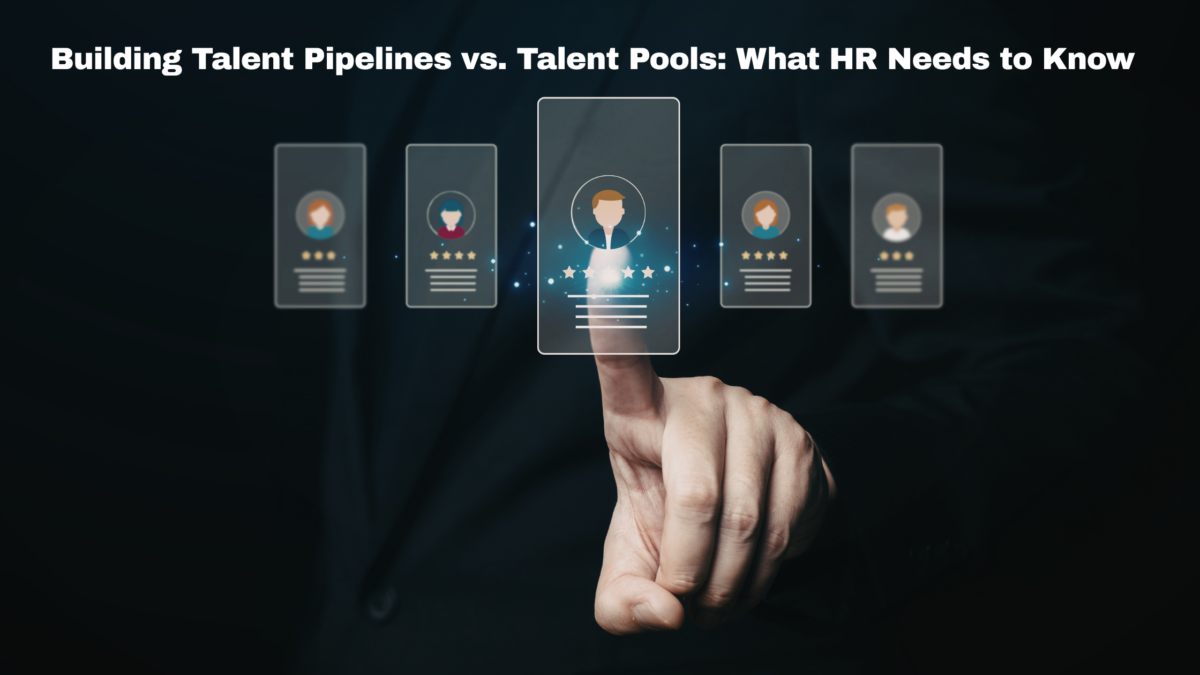
A hiring pipeline is a linear process. A role opens, recruiters search, screen, and shortlist. When the position is closed, the pipeline ends. This means HR teams repeat the same work again and again.
This model creates several challenges:
For high-growth companies, this reactive structure slows down decision-making and eventually impacts productivity.
A talent pool works very differently. It is an ongoing community of candidates who have skills that matter to the business. These individuals may not be job-hunting today, but they want to stay connected and informed.
Building a skills-first talent pool helps HR teams:
Because the pool is always active, HR teams can respond to new requirements almost instantly.
Shifting the focus from job titles to skills improves both speed and quality.
Faster Hiring
Shortlists are ready early in the process, which allows hiring managers to move quickly.
Lower Hiring Costs
HR teams don’t rely on emergency sourcing, job boards, or agencies for every new requirement.
Better Matches
Skills-based grouping surfaces talent with strong capabilities or adjacent skills that can translate into multiple roles.
Improved Workforce Planning
CHROs gain visibility into skill availability, talent gaps, and priority areas for development.
This approach helps organizations make hiring a planned activity instead of a crisis management exercise.
Managing a large pool manually is nearly impossible. Modern HR technology simplifies this by connecting different tools and automating repetitive steps. These platforms can:
As a result, HR teams spend more time building relationships and less time managing spreadsheets or duplicate data.
Ability Stack strengthens this shift toward proactive hiring with a connected talent ecosystem. The platform allows HR teams to:
Its modular structure mirrors how modern HR teams work, making it easier to adopt and scale over time.
A shift to skills-first hiring doesn’t require a full transformation on day one. HR leaders can begin with a few simple steps:
These foundational steps set the stage for faster, smarter, and more predictable hiring.
The companies that will succeed are those that treat talent relationships as ongoing conversations, not one-time interactions. Skills-first talent pools help HR teams stay ready, reduce costs, and build a stronger hiring engine.
As roles evolve and talent expectations rise, the shift toward talent pools is not just a trend. It is becoming a core part of how modern organizations stay competitive, responsive, and prepared for the future.
Traditional talent pools are outdated. Learn how AI talent pools help companies rediscover candidates, personalize outreach, reduce time-to-fill, and build always-on recruiting pipelines for future hiring demand.
Behavioral health hiring is facing rising demand, talent shortages, and burnout challenges. Learn how unified workforce systems, talent pools, and engagement automation help organizations reduce time-to-fill, improve retention, and scale sustainably.